
Amid U.S. Tariff Strain, Green Planet Bio-Fuels Supports Canada's Circular Economy
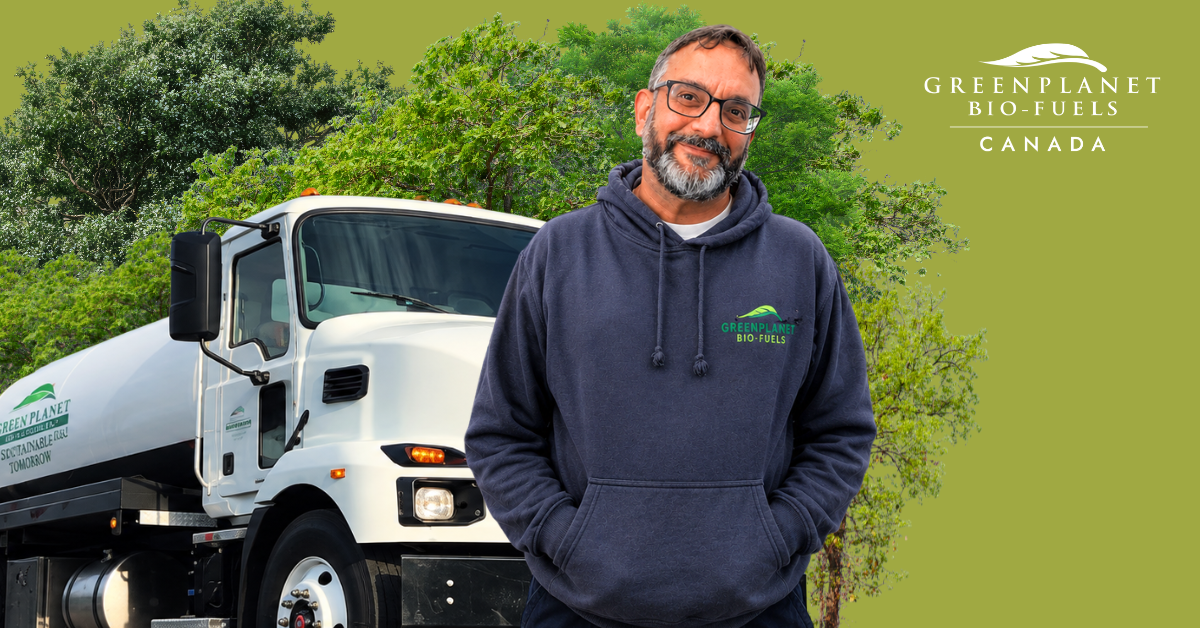
The Ontario and Quebec used-oil collector shows how small Canadian businesses are pivoting to eliminate supply-chain bottlenecks — reaffirming its commitment to customers, employees and partners while calling on industry and government to build a self-sufficient clean-fuel economy
TORONTO, Ontario — September 11, 2026 — Green Planet Bio-Fuels Inc., a certified B-Corporation, today reaffirmed its commitment to its customers, employees, suppliers and partners as renewed U.S.–Canada trade tensions place fresh scrutiny on the resilience of Canada's clean-fuel supply chain. The message from the company is clear: it remains business as usual, and more determined than ever to help build a stronger, more independent Canadian biofuel industry.
On September 8, the White House modified additional duties on certain Canadian products, effective September 15, in an action whose revised scope reaches into categories covering modified and inedible fats and oils. While the treatment of any specific shipment depends on its customs classification, the change is a reminder of how exposed cross-border feedstock markets can be to shifts in trade policy — and why keeping more of Canada's clean-fuel value chain on Canadian soil matters.
"Trade policy can change overnight. Our commitment to our customers, our people and our country does not," said Steve Hyman, President of Green Planet Bio-Fuels Inc. "We're operating as usual, planning carefully for whatever comes next, and staying focused on the bigger opportunity in front of us: building a Canadian biofuel system that stands on its own."
An industry with real momentum — and a real gap
Canada's clean-fuel sector has strong tailwinds. Federal Clean Fuel Regulations are steadily raising demand for lower-carbon fuels, and a new federal Biofuels Production Incentive is putting fresh support behind domestic biodiesel and renewable diesel producers. The demand is there. The policy is there. What's missing is enough connected, made-in-Canada capacity to meet it.
The Canadian biofuel supply chain runs through four stages — collection, refining, trade and blending. Green Planet BF operates at the critical first stage, recovering used cooking oil from nearly 10,000 food-service locations across Ontario and Quebec and diverting millions litres of waste oil from landfills and waterways. But the company is candid that the chain has a bottleneck at the refining stage: Canada can gather the feedstock and clearly needs the fuel, yet the middle of the chain — where feedstock becomes finished fuel — remains underbuilt. The result is a country rich in raw material but still dependent on imports for a large share of the fuel it consumes.
"We can collect the oil. Canadians need the fuel. The gap is in the middle — the refining capacity that turns one into the other," said Hyman. "That's the piece we have to build out together, and it's where the opportunity is greatest."
Mandates are a start — not the finish line
Provincial policy is already pulling demand toward Canadian-made fuel. Ontario requires 11 per cent renewable content in gasoline and 4 per cent in diesel, and now mandates that at least 75 per cent of the required renewable content in diesel — and 64 per cent in gasoline — be produced in Canada. British Columbia has doubled its renewable-content requirement for diesel from 4 to 8 per cent and requires that content to be Canadian-produced, with a matching made-in-Canada requirement now applying to its 5 per cent gasoline mandate. Alberta, Manitoba and Saskatchewan maintain their own renewable-fuel requirements as well.
But mandates alone don't guarantee that Canada's recoverable used oil is actually captured, refined domestically and blended into the fuel Canadians use. Too much recoverable feedstock still goes uncollected, and too much finished fuel is still imported to meet demand the country could increasingly serve itself. Rising Canadian-content rules only sharpen the point: the demand for domestically produced fuel is being written into law faster than the capacity to make it is being built.
"Mandates create the pull. Now we have to build the supply to match," said Hyman. "That means growing every stage together — more collection, far more refining capacity, and stronger links between them."
A call to build it together
Green Planet BF is urging every part of the ecosystem to move in step. "We have the technology and the talent. What we need now is scale," Hyman said. "This is a call to restaurants, food processors, municipalities, producers, refiners, investors and the government to join forces. If we grow Canada's supply and capacity together, we can build a clean-fuel ecosystem that serves Canadians independently — far less vulnerable to what happens across the border. Green Planet BF is ready to lead from the collection side and work shoulder-to-shoulder with everyone building the rest."
Green Planet BF will continue working alongside industry leaders, customers and public-sector partners to advance responsible used-oil recovery and help build a resilient, self-sustaining Canadian clean-fuel economy.